
❋
SCREEN PRINTING: OUR PROCESS
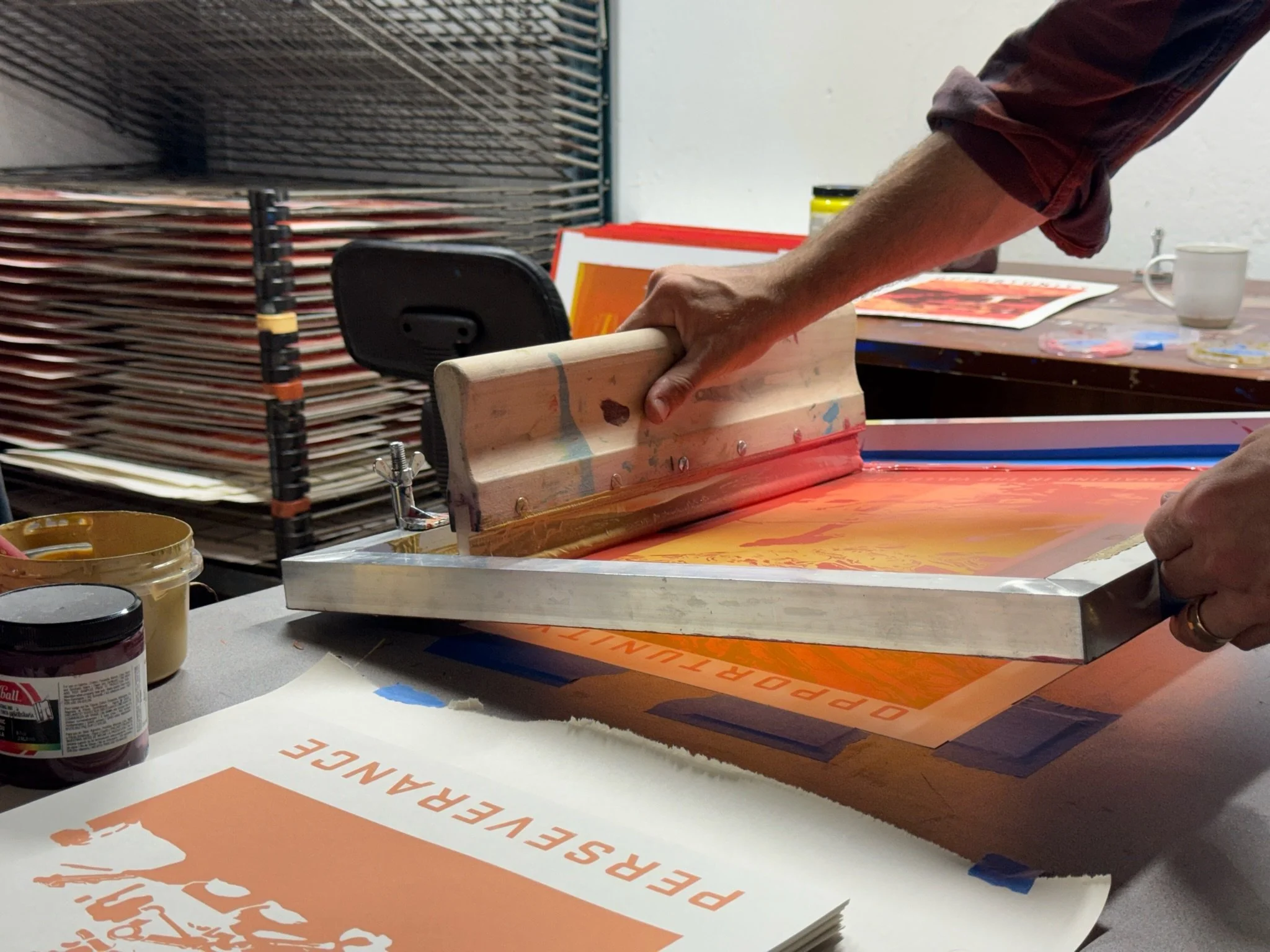
Screen printing is a traditional printmaking process where ink is pushed through a fine mesh screen onto paper. Areas of the screen are blocked with a stencil, so ink only passes through the open parts of the mesh. The ink that passes through forms the printed image.
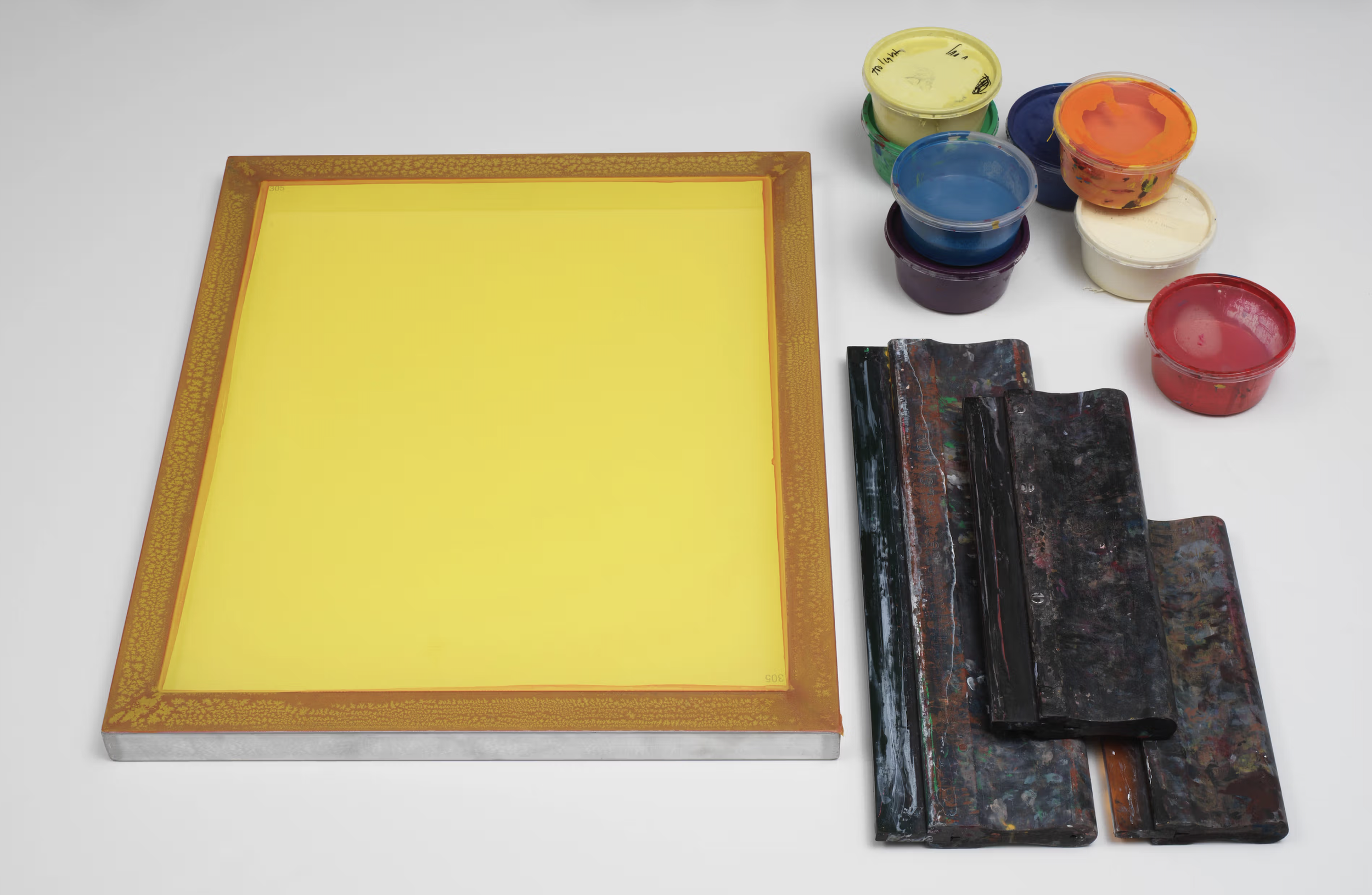
An Assortment of Screenprinting Supplies❋ The SCREENA screen is made from mesh stretched tightly across a wooden or metal frame. Historically, screens were made with silk, which is why the process is sometimes called silkscreen printing. Today, most screens are made with synthetic mesh.
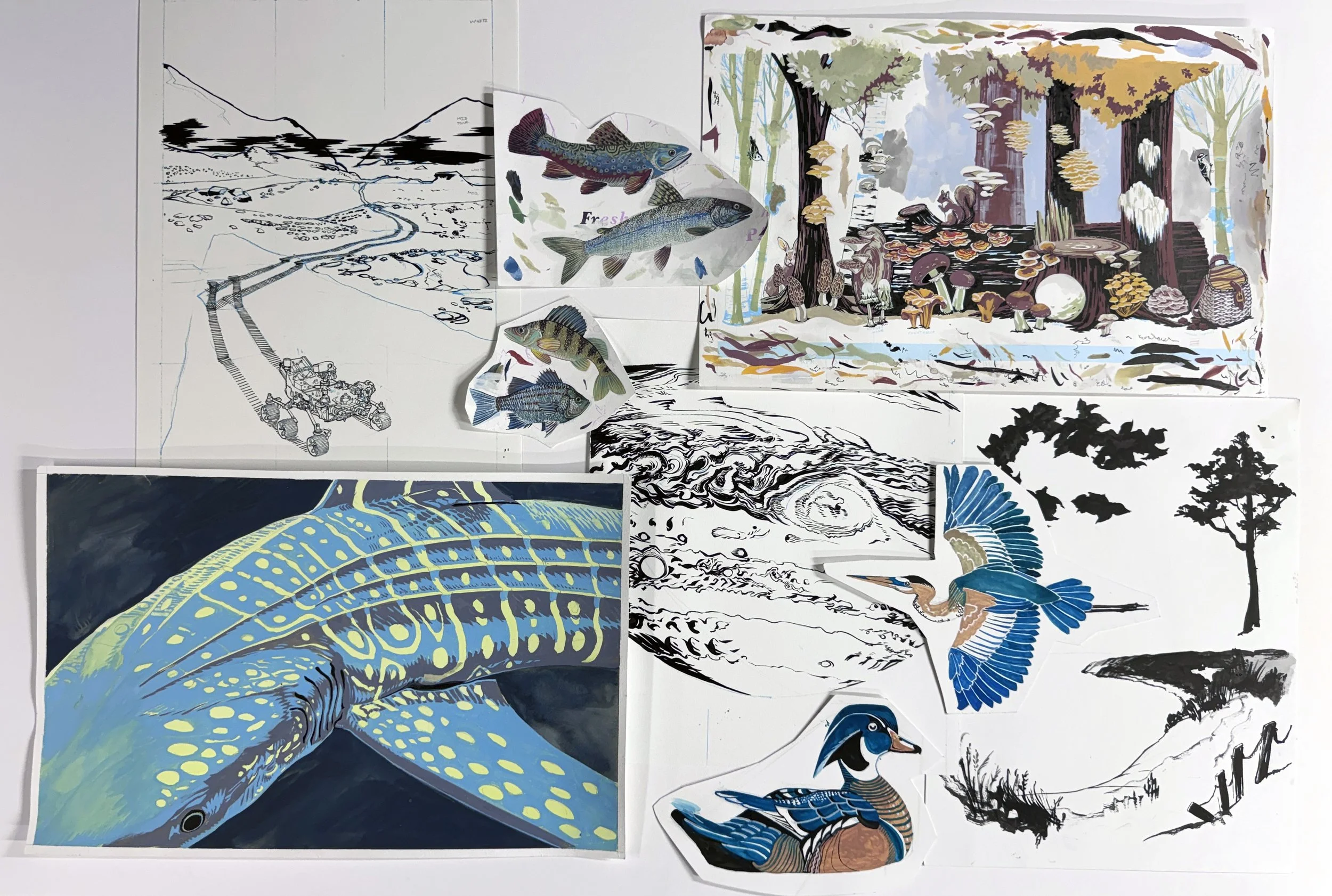
An Assortment of Full Circle Original Illustrations❋ THE ILLUSTRATION There are many ways to create a stencil on a screen. Some artists paint directly onto the screen, while others use cut paper, fabric, or other materials. At Full Circle, we most often use a photo-sensitive emulsion process.
Every Full Circle print begins as a hand-painted illustration. We create the original artwork using water-based mediums like ink, gouache, and pencil. After the artwork is scanned, we prepare the image digitally: refining the composition, separating the colors into layers, and creating a transparency for each color in the final print. Each transparency is printed onto inkjet transparency film.
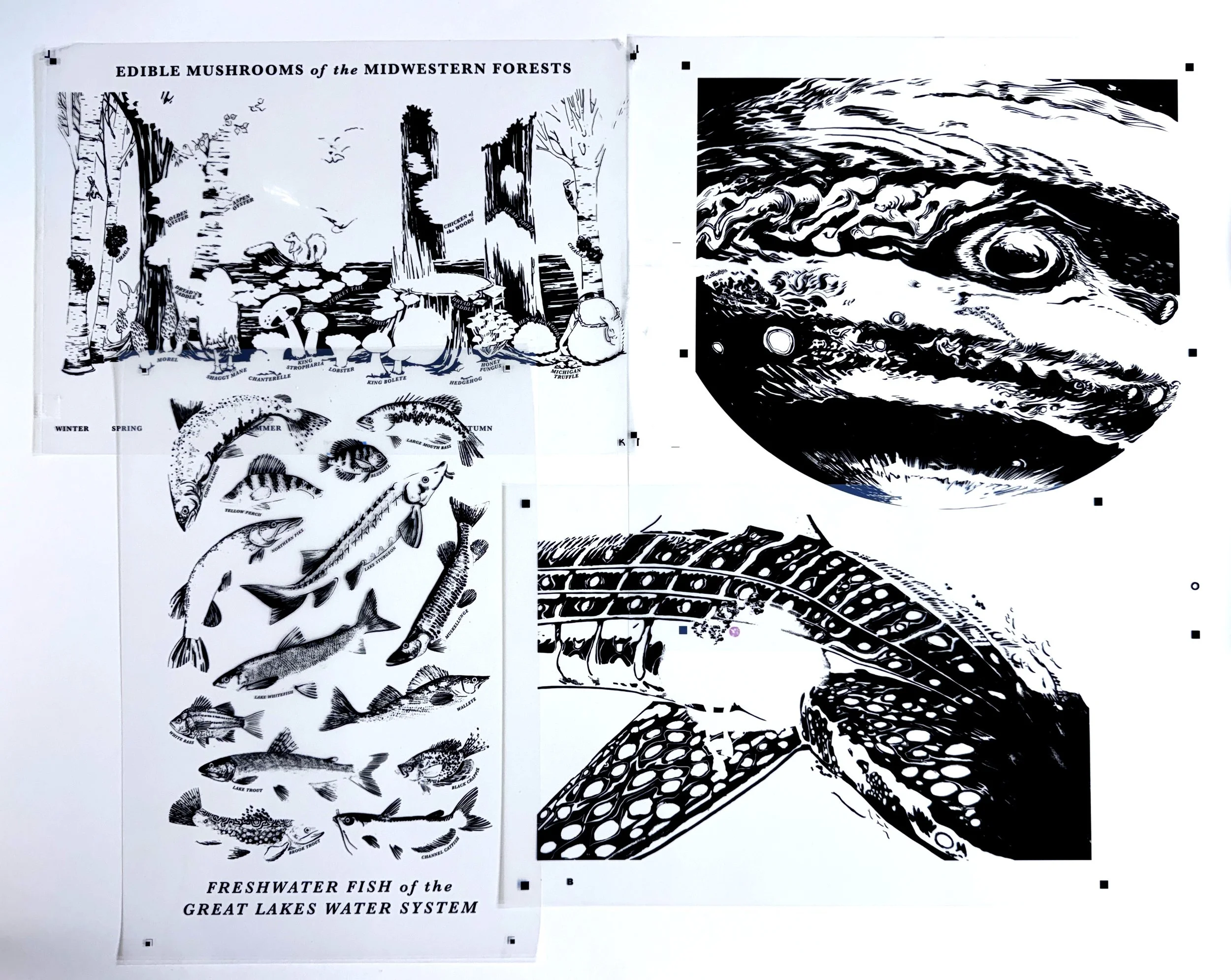
An Assortment of Full Circle TRANSPARENT FILMS, USED TO EXPOSE THE IMAGE INTO THE SCREENS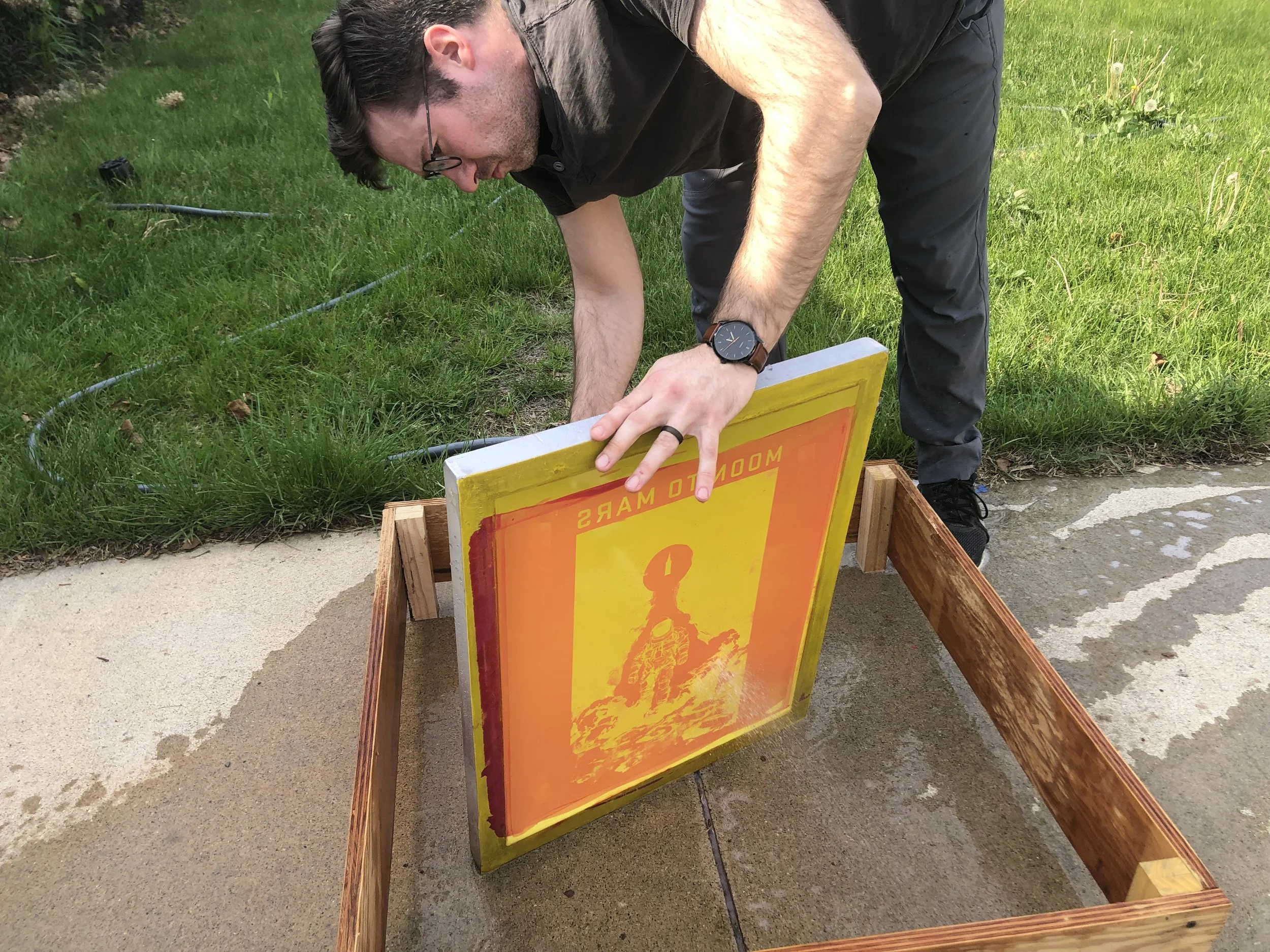
TYLER WASHING OUT A FRESHLY EXPOSED SCREEN❋ PREPARING THE SCREENTo prepare the screen, we coat it with a thin, even layer of photo-sensitive emulsion using a scoop coater. Once the emulsion dries, we place the transparency against the screen and expose it to ultraviolet light. The UV light hardens the emulsion around the design, while the areas blocked by the transparency remain soft. After exposure, we wash the screen out with water, revealing the open stencil where ink will pass through.
PRINTING
❋ THE PRINTING PROCESSOnce the screen is ready, it is secured to a printing board or screen printing table. Ink is placed along the top edge of the screen and pulled across the image with a squeegee. This first pass, called flooding the screen, fills the open areas of the stencil with ink.
Then a sheet of paper is placed underneath the screen. With another pull of the squeegee, ink is pushed through the open mesh and onto the paper, creating the printed image.
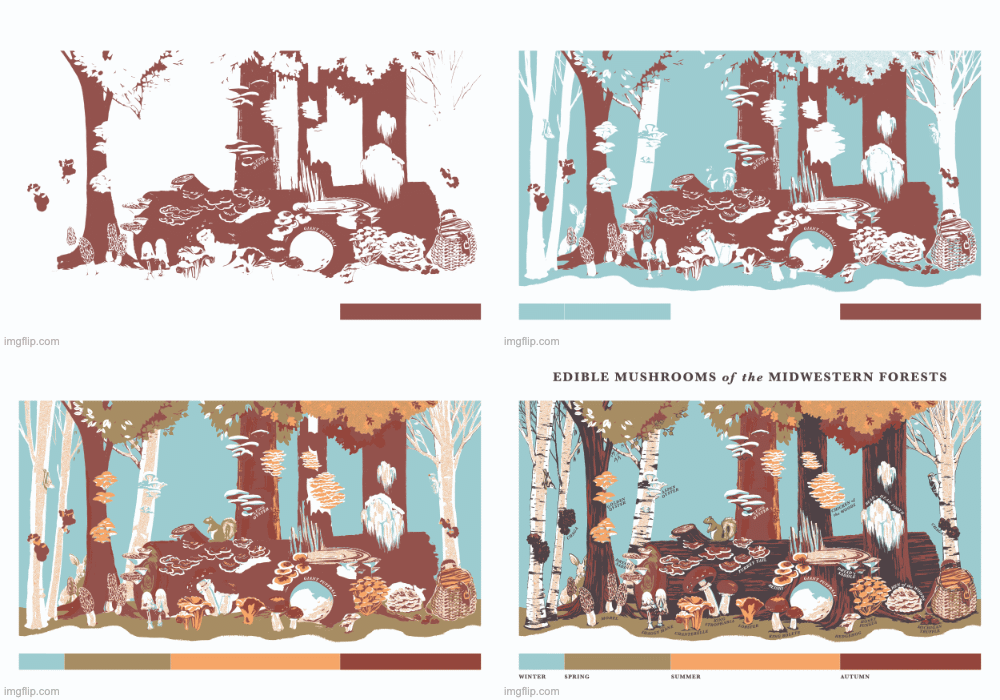
COLOR LAYERING for our print "WATERBIRDS OF THE GREAT LAKES REGION"❋ THE COLOR LAYERSFor prints with multiple colors, each color requires its own transparency and stencil. We mix all of our inks by hand, and print one color at a time, carefully aligning each layer so the final image comes together in registration.
"Printmaking is fun because it takes a perfectly simple process like drawing and makes it as complicated and error prone as possible."
- GEORGE BODMER